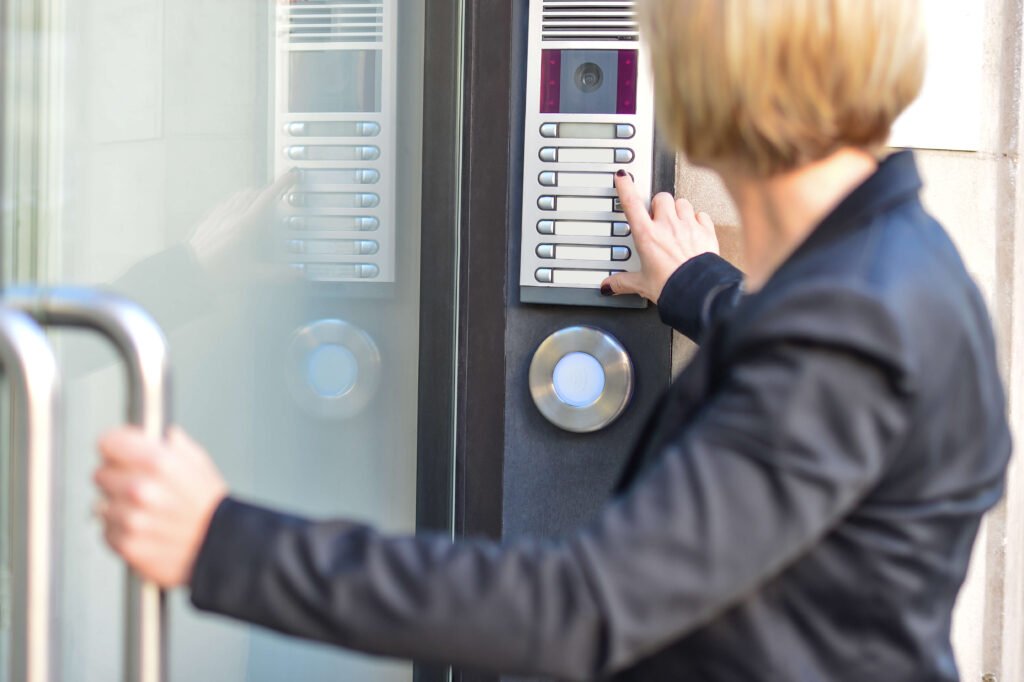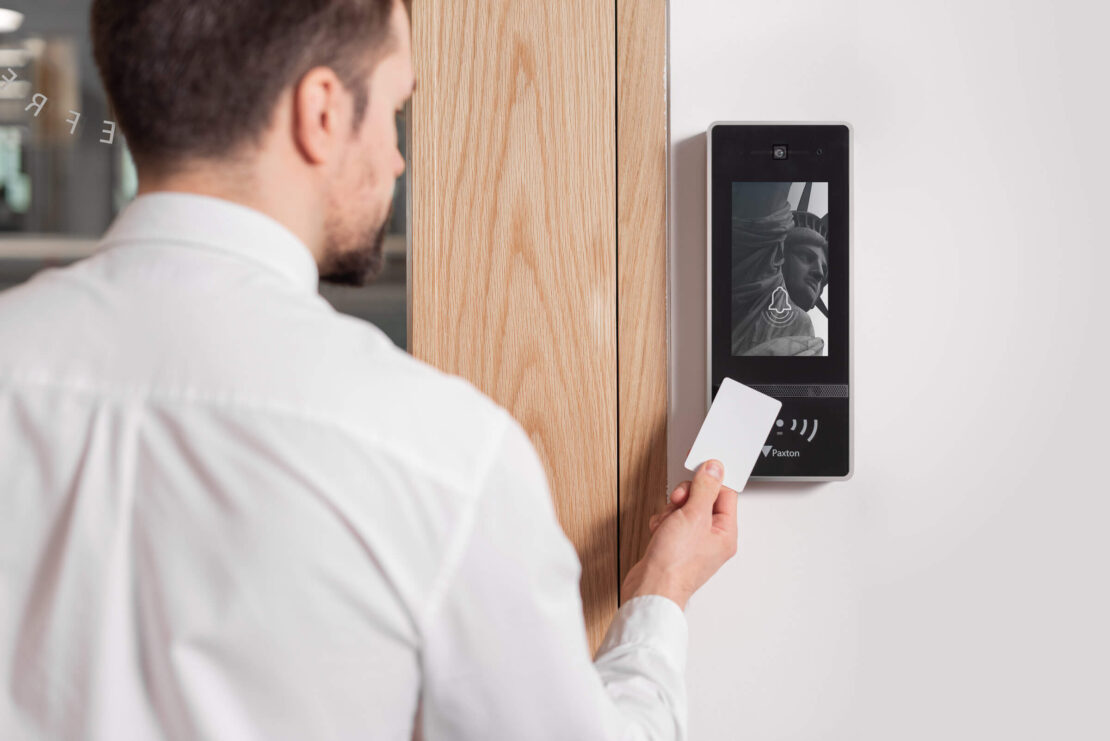
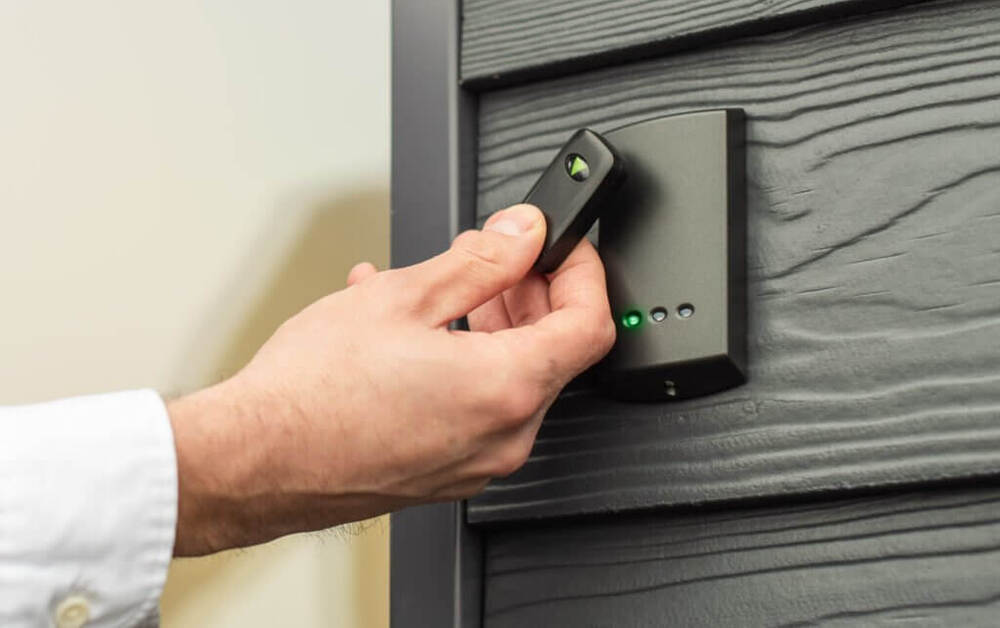
The benefits of access control systems are numerous. These systems help protect premises, manage the flow of staff and visitors, and restrict access to certain areas of a site.
Today’s article covers the key benefits and advantages of installing door access control systems, along with providing insights into some of the options available to protect businesses.
In this article, we cover:
- An introduction to access control
- The types of door access solutions
- The benefits and advantages of these systems
Let’s get started.
Key article takeaways (TL;DR)
- Access control systems prevent unauthorised access to buildings, rooms, or restricted areas.
- They replace physical keys with fobs, cards, biometrics, or mobile credentials.
- Access events are logged, helping with audits, safeguarding, and HR investigations.
- Systems can be customised by time, location, or user role.
- Integration with CCTV and alarms creates a layered, site-wide security solution.
Table of contents
- What are the benefits of access control systems?
- What is door access control?
- The different types of access control systems
- The benefits of door access control systems
- The benefits of access control – summary
- Looking to speak to a security expert about your access control requirements?
- Frequently asked questions
What are the benefits of access control systems?
Later in this article, we will provide a detailed overview of the main benefits of access control systems. For now, here is a quick summary of each:
- Tracking the whereabouts of staff in and around a site
- Protecting assets and deterring crime
- Restricting access to certain areas
- Monitoring staff timekeeping
- Improved productivity
- Peace of mind
In the next two sections of this guide to the benefits of access control systems, we offer an introduction to this specialist security solution and offer a quick overview of each type available.

What is door access control?
Access control refers to the measures and systems implemented to regulate and manage entry in and around a physical environment. It encompasses various security systems, such as door entry, intercoms, ANPR, and keycard solutions.
These solutions can be designed and programmed to grant universal access to some parts of the building, whilst restricting entry to other areas of a site.
Furthermore, access control aims to enhance security by ensuring that only approved individuals can enter designated spaces, protecting against unauthorised entry and potential security breaches in buildings, facilities, or restricted areas.
When it comes to security, technology is playing an increasing role within businesses and access control is one area on the rise.
The different types of access control systems
The range of access control systems includes:
- Keyless & fob door entry
- Video intercom
- Audio intercom
- ANPR cameras
- Gate automation
Each system has its own purpose.
For example, keyless door entry systems are typically deployed to manage the flow of staff in and around a site. Intercoms are used to grant access to visitors, or to manage internal access – usually at industrial sites safety is key.
Lastly, gate automation systems are deployed to manage access via a main entrance to a site.
Related reading: The different types of access control systems
The benefits of door access control systems
The benefits of access control systems are vast. Whether it’s a keyless door entry system, video, or audio intercom the benefits of access control systems range from protecting sites against crime, ensuring staff safety, and managing the flow of site visitors, and more.
Here are a number of reasons access control is becoming increasingly important for businesses.
Tracking the flow of people around a site
Ever since the rise of the computer and IT, information and data have become the backbone of business decision-making and management. Therefore, access control systems enable businesses to know exactly where people are in the building; the room they are in, for how long, and more.
Furthermore, from a health and safety point of view, this is critical and saves time when locating people in the event of a fire or other emergencies.
Related reading: The advantages of Paxton access control
Protecting assets and deterring crime
Access control systems are designed to restrict unauthorised access to a premises or site. As a result, this provides a secure means to keep intruders out, helping to prevent damage and theft.
Additionally, this protects staff from potential threats such as violence and abuse.
Modernising security
Unfortunately, keys can get lost and forgotten. A lost office door key poses a security threat to a business. Furthermore, there is also the cost of having to replace multiple keys or at worst, every office door lock.
By implementing a keyless door entry system, these threats become obsolete. Unlike a physical key, a keycard or fob, if lost, can simply be removed from the system and a replacement issued.
Restricting access to certain areas of a site
Access control systems can be designed to restrict entry to specific areas of a business’s premises. Typically, restricted areas contain hazardous waste, expensive IT equipment, or sensitive information.
As a result, restricting access to ceratin areas of a building or site, helps prevent theft, accidental damage to property, and sabotage.
Staff timekeeping
The data provided by access control systems can be invaluable to a business. Access control systems allow you to track persistent employee lateness as all access data is stored on a database.
This helps businesses spot staff members who are consistently late arriving to work and leaving early. Therefore, lateness can be dealt with professionally, with evidence to support any disciplinary action.
Staff productivity
Productivity is the backbone of many businesses.
An unproductive workforce reduces operational efficiency, and impacts revenue and customer service. Access control solutions enable businesses to deal with productivity issues such as unauthorised breaks and more.
Integration
Businesses often rely on a mix of security systems, to protect their staff, assets and operations. Access control systems can integrate with other security solutions such as CCTV, perimeter gates and alarms.
For example, if someone attempts to gain access to a restricted area, CCTV camera systems can be programmed to hone in on the person, providing visual evidence of their activity
Peace of mind
Access control isn’t all about tracking people, using data accordingly and managing productivity. These systems can provide businesses with peace of mind, knowing who is in the building at all times.
They limit the potential for criminals to gain access and therefore reduce the threat of theft and vandalism. This helps create all round peace of mind for the business owner and staff.
The benefits of access control – summary
In conclusion, access control systems play a pivotal role in modern business security, offering a range of benefits that contribute to the overall efficiency and safety of a workplace. From tracking staff movement and protecting assets to deterring crime and improving productivity, these systems have become essential tools for businesses of all sizes.
By providing a detailed overview of access control, including various types such as keyless entry and intercoms, we hope this guide has highlighted the diverse solutions available to protect businesses.
In a world where security is increasingly becoming front of mind for many businesses, access control systems offer companies the ability to not only secure their premises but also streamline operations and promote a sense of peace of mind.
Looking to speak to a security expert about your access control requirements?
If you are looking for a new or upgraded access control system to protect your site, get in touch with the team today on 0800 689 1835.
Frequently asked questions
Access control systems offer better security, more control, and full visibility over who enters your premises. They reduce the risk of lost keys, allow for time-based permissions, and provide audit logs that support safeguarding, compliance, and incident investigations. As you can see, the benefits of commercial access control systems are vast.
By restricting entry to authorised users, door access control systems help prevent unauthorised visitors or intruders. They also ensure sensitive areas like server rooms, stockrooms, or HR offices are only accessible to approved staff, improving overall site safety and data protection. All in all, this is a key benefit to installing access control systems for businesses, schools and government offices.
Yes. Fobs, cards, PINs, biometrics, or mobile apps offer a more secure alternative to physical keys. Lost credentials can be deactivated instantly, unlike traditional keys, which pose a high risk if duplicated or misplaced. This is some of the key benefits of electronic door access control solutions. No more news to worry about staff losing their keys.
Key fobs are quicker, more secure, and harder to share or guess than PIN codes. They offer individual accountability and are easily deactivated if lost. PIN systems still have their place, particularly in low-risk or backup scenarios. Moreover, key fob systems enable businesses to track the whereabouts of their employees. As a consequence, door access systems are used to improve productivity by seeing who is taking multiple breaks, or when they’re late.
Yes. These systems provide detailed logs of entry attempts, which support data protection policies and compliance audits. They help ensure that only authorised personnel can access areas containing sensitive or personal data.
Permissions can be tailored based on role, time, location, or access level. For example, cleaning staff may have evening access only, while senior managers have full-site access. This flexibility improves security without impacting operational flow.
Integrated systems allow CCTV to record when a door is accessed and enable alarms to trigger if forced entry is detected. This layered approach enhances incident verification, reduces false alarms, and provides a full picture of security events.